
*Period ending 30th November, 2025, ** Three-year period for PMS and AIF, also five year period for PMS, *** Rolling five-year returns of all the Multicap PMSes reporting to PMS Bazaar, **** For rolling five year periods from inception till date, ***** Five-year Period
In November 2025, Indian markets displayed notable composure, delivering modest, measured gains even as Q2 FY26 GDP surged an impressive 8.2%, with the Nifty 50 and Sensex rising 1.87% and 2.11%, respectively—reinforcing India’s position as a global growth leader. This resilient price action occurred as a relentless wave of domestic institutional buying and retail SIP inflows effectively neutralized persistent selling pressure from foreign investors. Ultimately, India’s narrative remained firmly anchored in its domestic stability, even as inflation began to firm up from previous record lows, signaling a market that is maturely aligning its price with its powerful economic fundamentals.
In November, the benchmark S&P BSE 500 TRI rose by 0.96%. Against that, Sameeksha PMS (Portfolio Management Service = Separately Managed Accounts) was up by 0.24% (net of all fees and expenses), indicating an underperformance of 0.71%; while having cash levels of 7.6% at the start of the month and 16.2% at the end of the month.
From the fifty-seven rolling five year periods that we have completed, what stands out the most is the consistency of alpha generation across various periods. This stability indicates that the portfolio’s performance is not reliant on isolated stock picks or favorable market timing. Rather, it reflects a disciplined and repeatable investment process. The rolling return analysis reinforces that temporary market conditions do not drive the outcomes but are the result of a reliable, long-term approach to investing. We discuss the data in more detail later in this letter.
Sameeksha Domestic AIF (Alternative Investment Fund = “Hedge Fund”) also continues to deliver top-notch performance, having recently completed three and half years of operating history. This AIF ranks right up at number three out of forty-four Long-Only AIFs reporting their performance to PMS Bazaar. Our AIF was up by 0.2% (post fees, expenses and taxes), indicating an underperformance of 0.8% over the benchmark.
In the analysis that follows, we compare our performance against a set of highly regarded mutual funds, evaluating returns alongside key risk-adjusted metrics such as the Sharpe Ratio and upside/downside capture ratios.
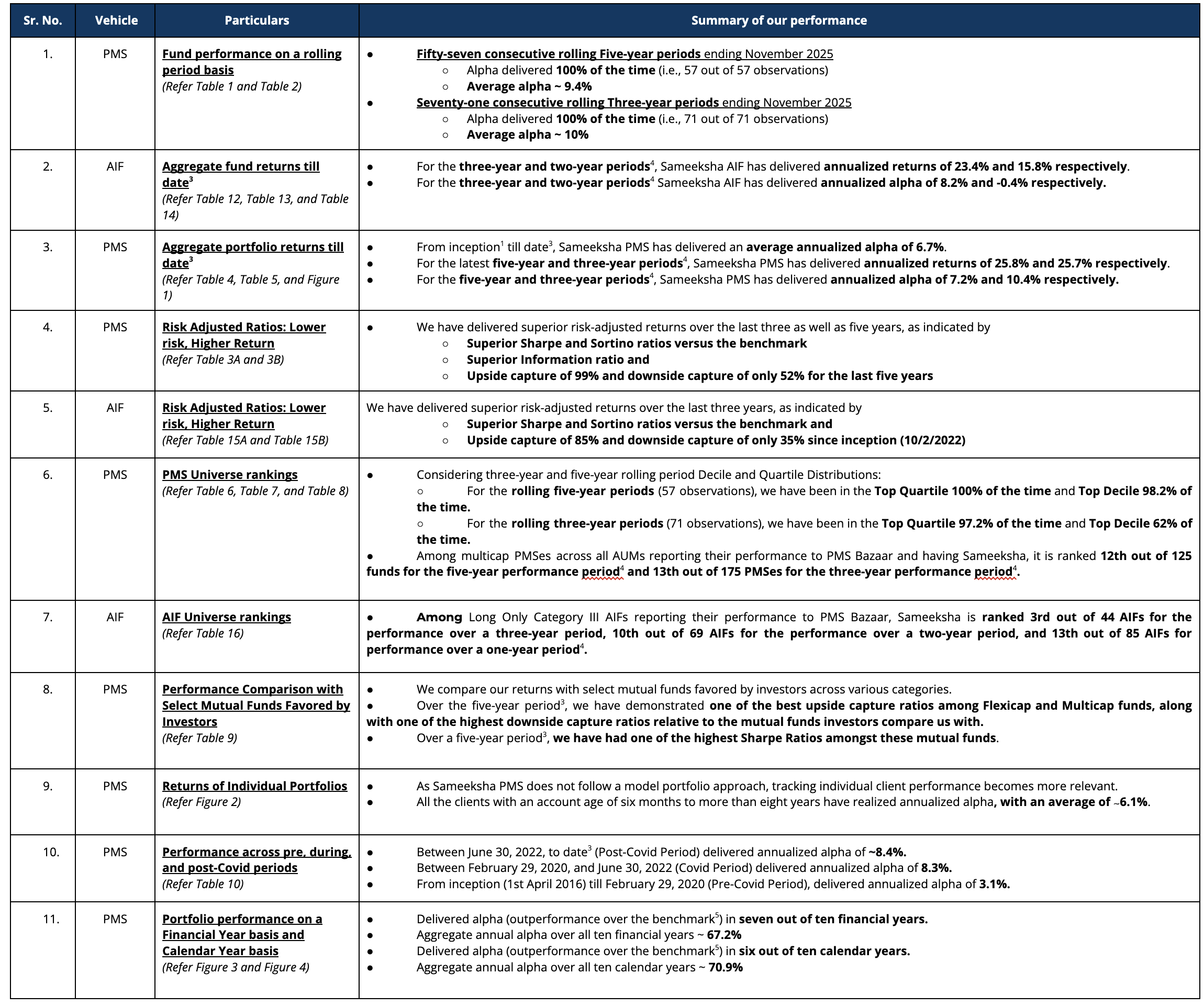
We summarize key aspects of our performance as follows:
PMS Performance and other details
Three important things must always be kept in mind when looking at performance data. First, for funds such as ours that do not follow a model portfolio strategy, the performance of individual clients over different durations is important to examine. Second, some PMSes may charge fees outside the PMS, which could make their performance data non-comparable to ours after fees. Third, it is important to look at not only portfolio returns but also risk-adjusted ratios. We provide data to address all three points later in this note.
Aggregate Portfolio Performance and ranking on a rolling period basis
Rolling returns are a more useful indicator of consistency in performance versus single-period returns. For the rolling five-year periods applicable from March 2021 till date, Sameeksha PMS has delivered aggregate annualized alpha 100% of the time (57 out of 57 observations), ranging from ~5% to ~16%. For the rolling three-year periods applicable from January 2020 till date, Sameeksha PMS has delivered aggregate annualized alpha 100% of the time (71 out of 71 observations), ranging from ~1% to ~23% (Table 1). For both rolling five and three-year periods covered in Table 1, alpha has averaged around 9.4% and 10% respectively.
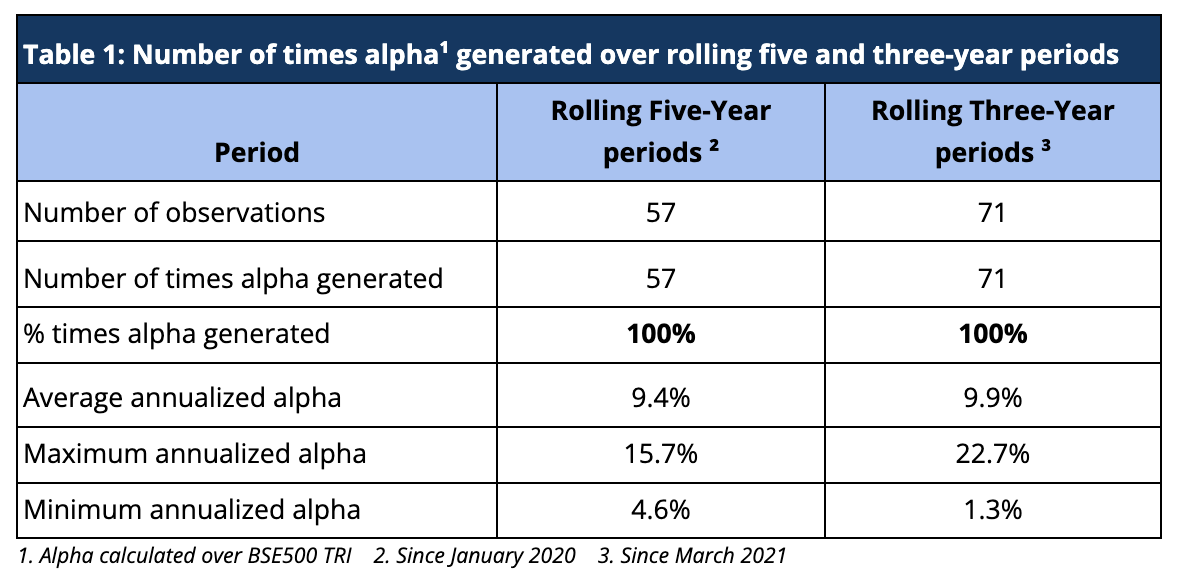
To analyze the rolling five-year and three-year returns, we did an insightful exercise, analyzing average five-year and three-year rolling returns across different time frames.
The table below (Table 2) presents Sameeksha PMS’s portfolio performance using rolling five-year and three-year returns. This method evaluates returns over overlapping periods ending on each date within a given time range. By averaging these rolling returns over different lookback periods, we gain a deeper understanding of how consistently the portfolio has delivered value over time, compared to the BSE 500 TRI benchmark.
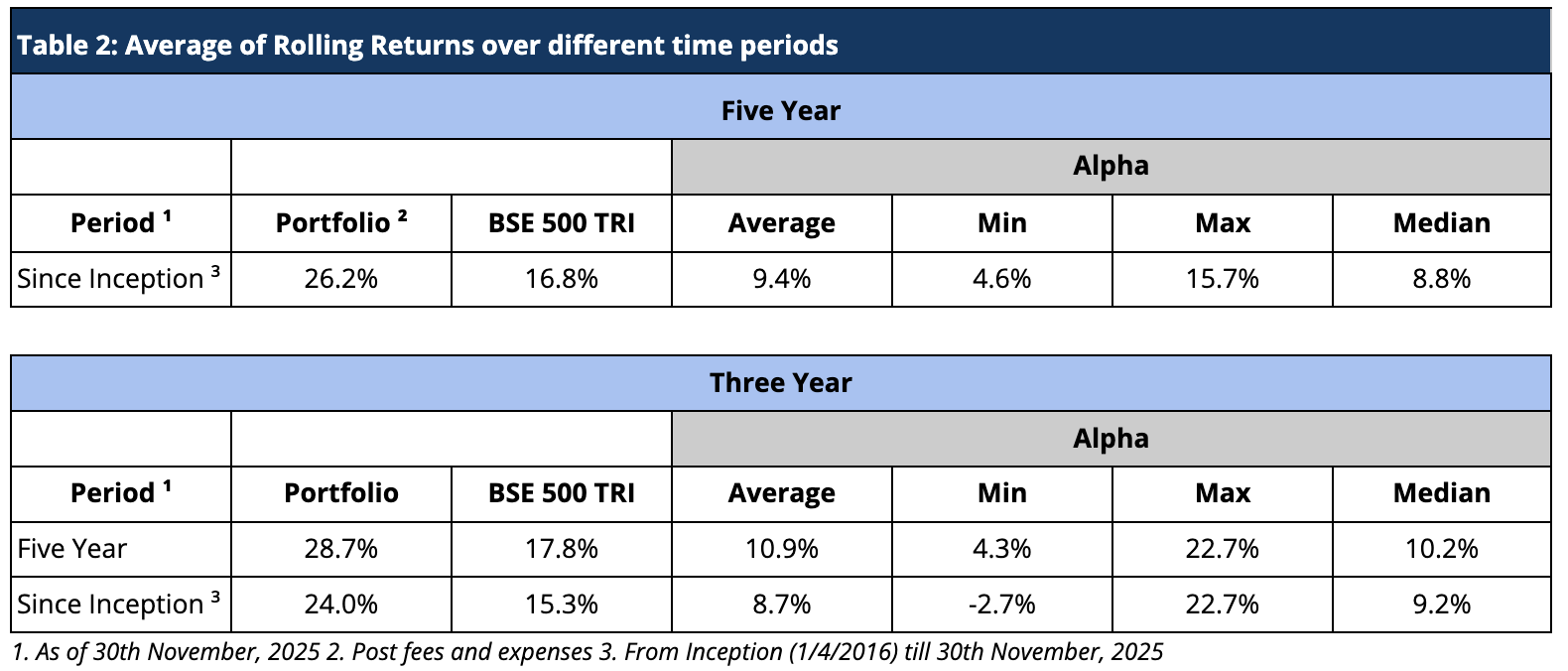
The results reveal a strong and persistent pattern of outperformance. Across all measured periods, average three-year or five-year rolling returns have consistently outpaced the benchmark. What stands out in particular is the stability of alpha across different lookback periods. This consistency suggests that the portfolio’s success is not driven by isolated bets or favorable market timing, but rather by a disciplined and repeatable process. The rolling return framework helps illustrate that this performance is not a result of temporary market positioning but instead reflects a reliable, long-term approach to investing.
Risk Adjusted Ratios: Not all returns are the same, Higher Returns at lower Risk
When compared on a risk-adjusted basis, our PMS has shown an even stronger performance. The Information Ratio (IR) measures the excess return of a portfolio over a benchmark per unit of active risk. A higher Information Ratio suggests better risk-adjusted performance.
Moreover, Upside Capture measures how well a fund performs as compared to a benchmark when the benchmark has positive returns. A higher upside capture ratio (>100%) indicates that the fund captures more of the benchmark’s positive movements. Whereas, Downside Capture measures how well a fund performs compared to a benchmark when the benchmark has negative returns. A lower downside capture ratio (<100%) indicates that the fund preserves capital better during market downturns (Table 3A).
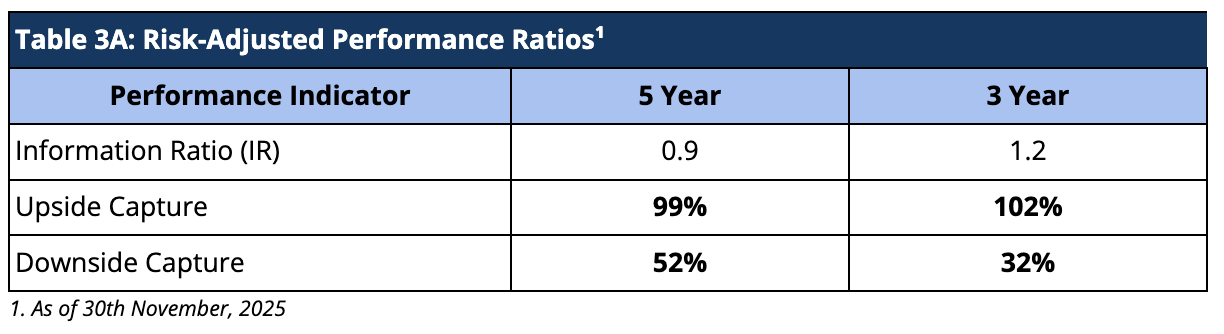
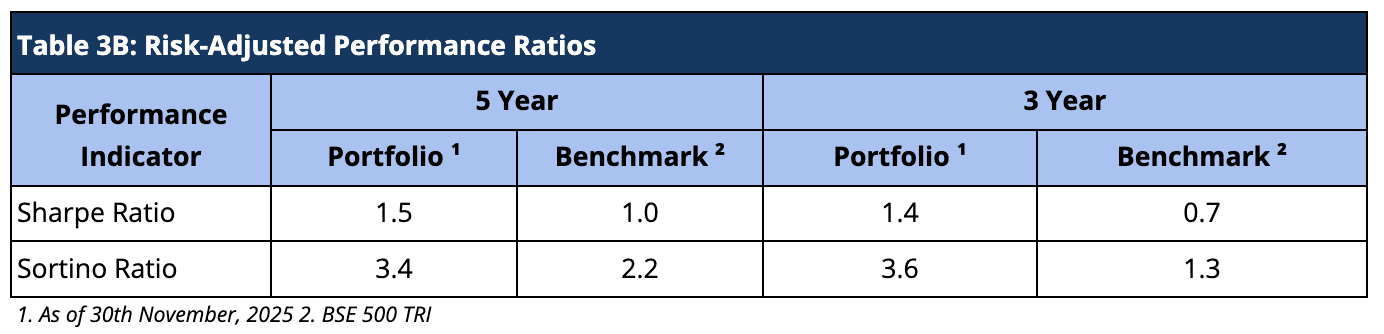
Furthermore, other risk-adjusted returns – Sharpe ratio is also significantly higher. The Sortino ratio measures the risk-adjusted return of an investment, focusing only on the downside risk. A higher Sortino ratio indicates better risk-adjusted returns, particularly concerning downside risk (Table 3B).
Aggregate Portfolio Returns over various time periods
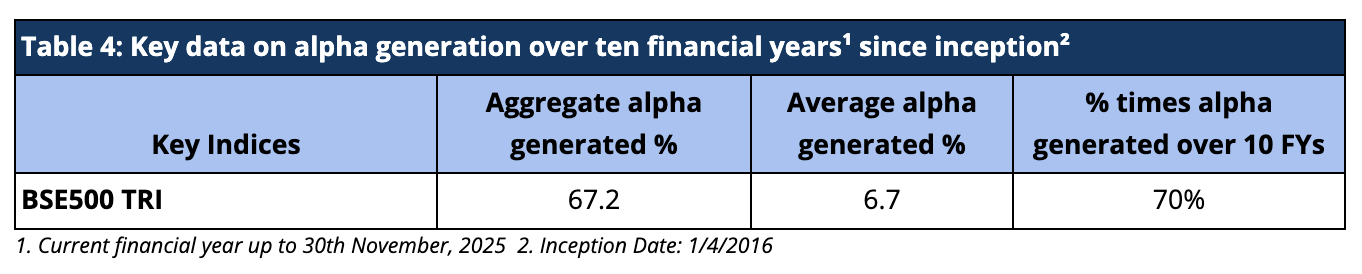
Sameeksha PMS has delivered a substantial aggregate annual alpha of 67.2% over BSE500 TRI over the ten financial years (including the current incomplete financial year), implying an average alpha of 6.7% since inception (Table 4).
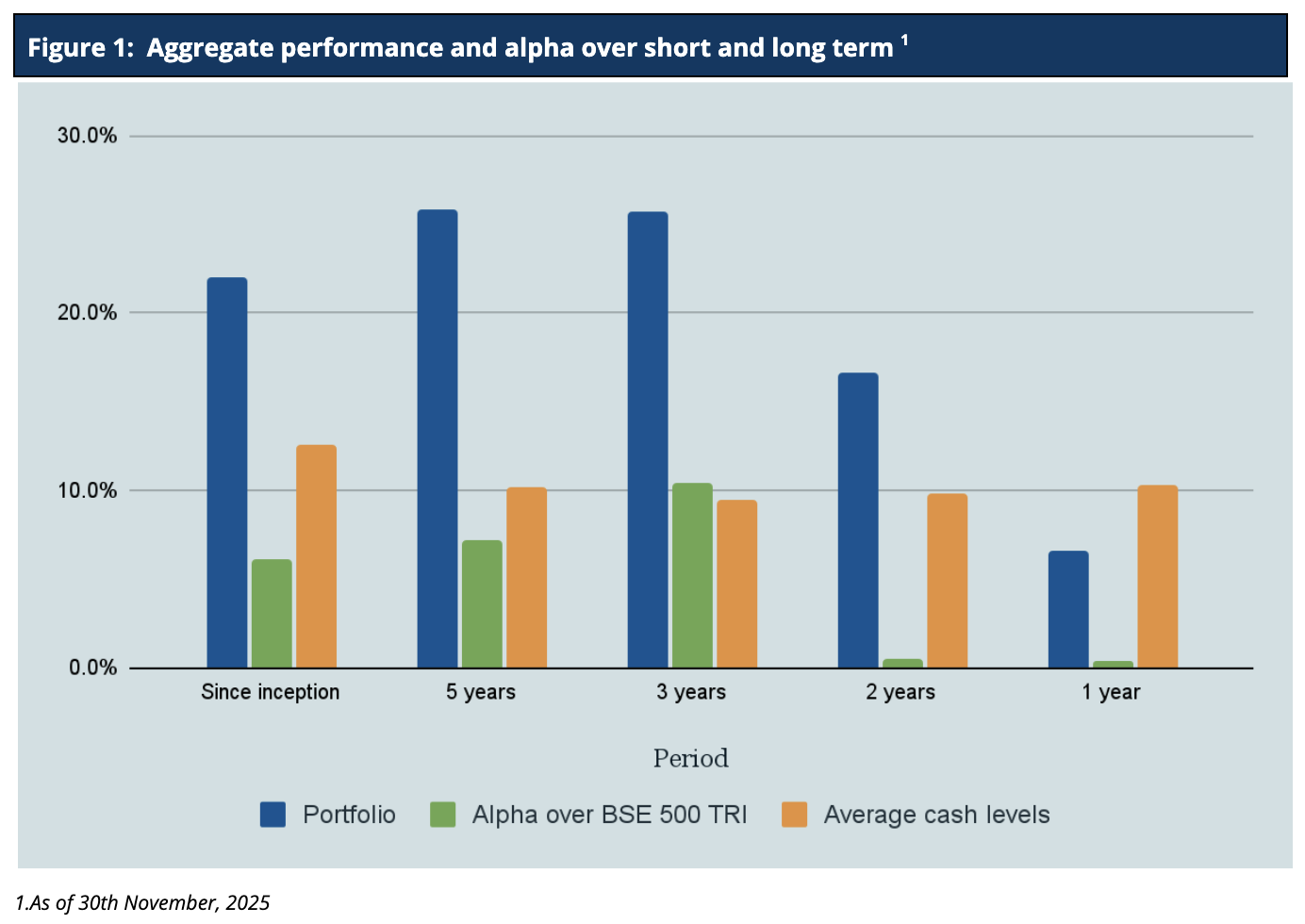
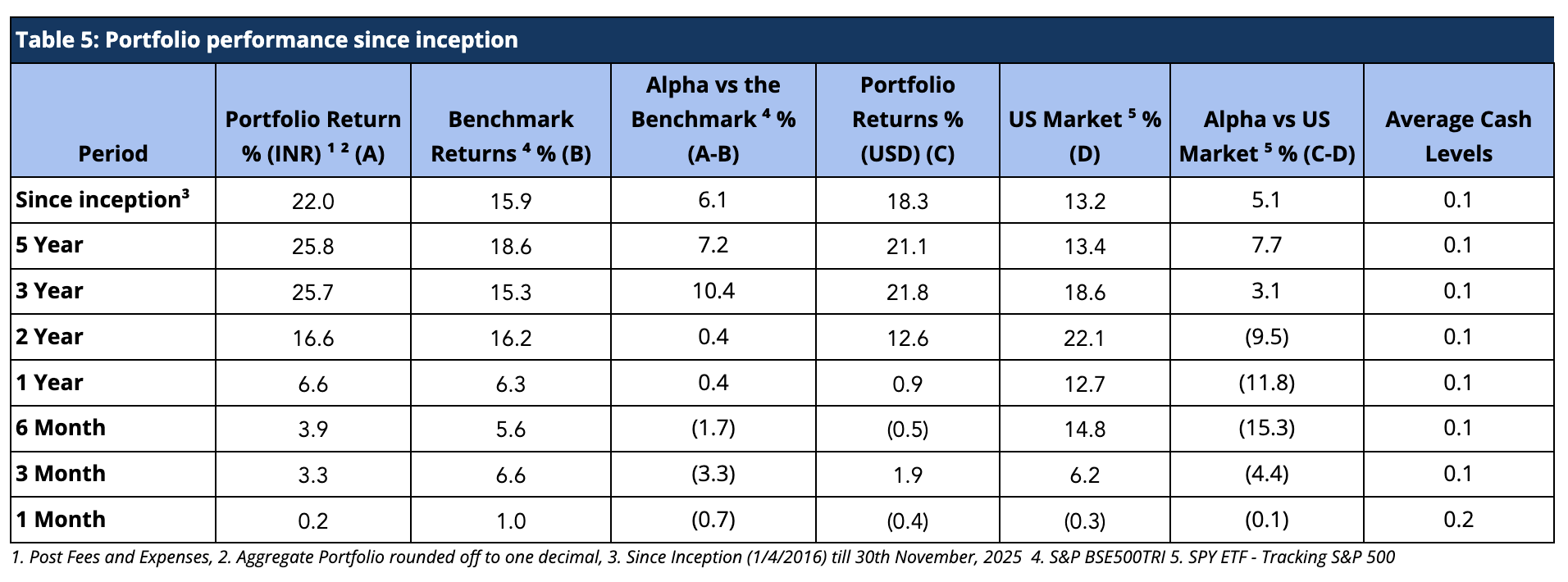
It is important to note that we have maintained relatively higher levels of cash (12.6% on average over the entire period since inception) from time to time throughout the management of the portfolio. Notwithstanding the same, from inception, over five years and three years respectively, we have generated returns of 22%, 25.8% and 25.7% in INR terms and 18.3%, 21.1%, and 21.8% in USD terms, thus generating substantial alpha over the Indian benchmark BSE500 TRI. Also, we have delivered strong returns relative to benchmark across various key time periods (Figure 1 and Table 5).
Performance within the PMS Universe
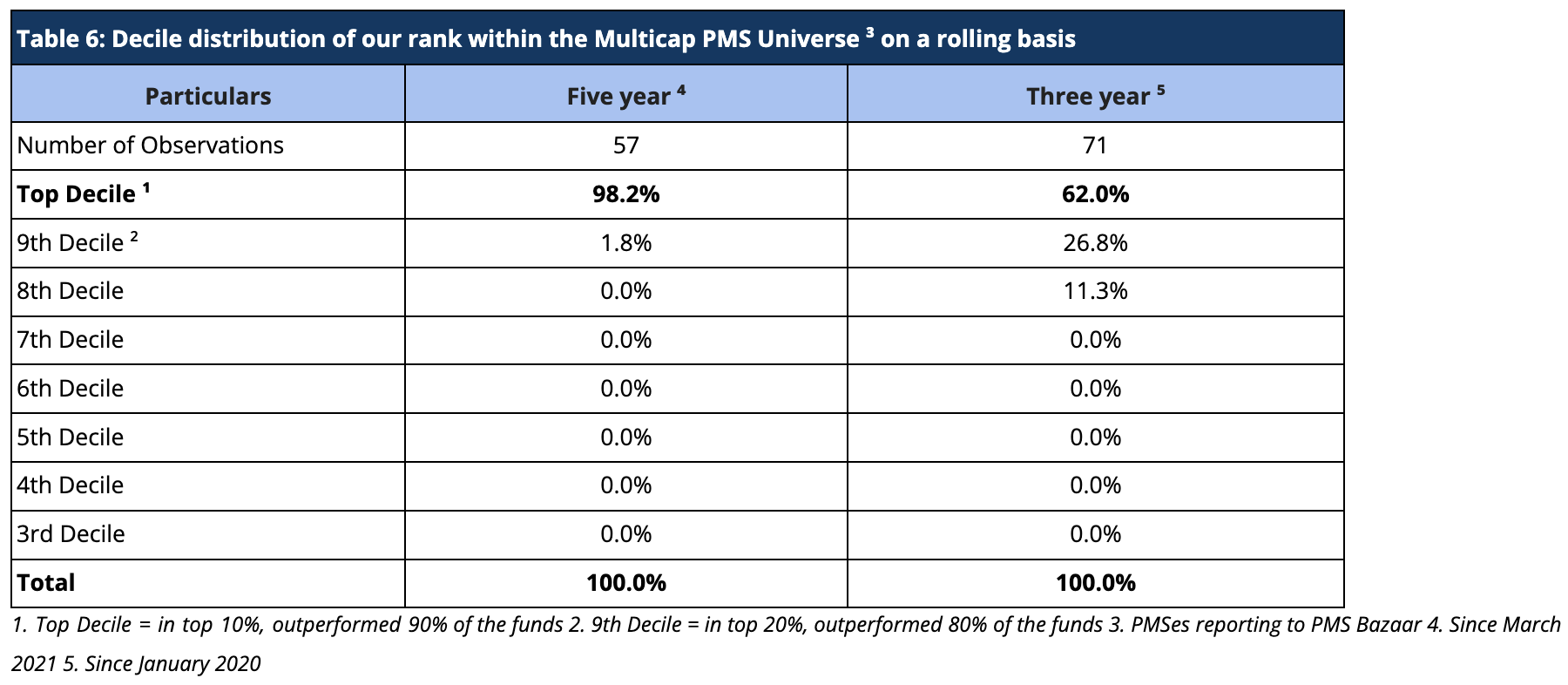
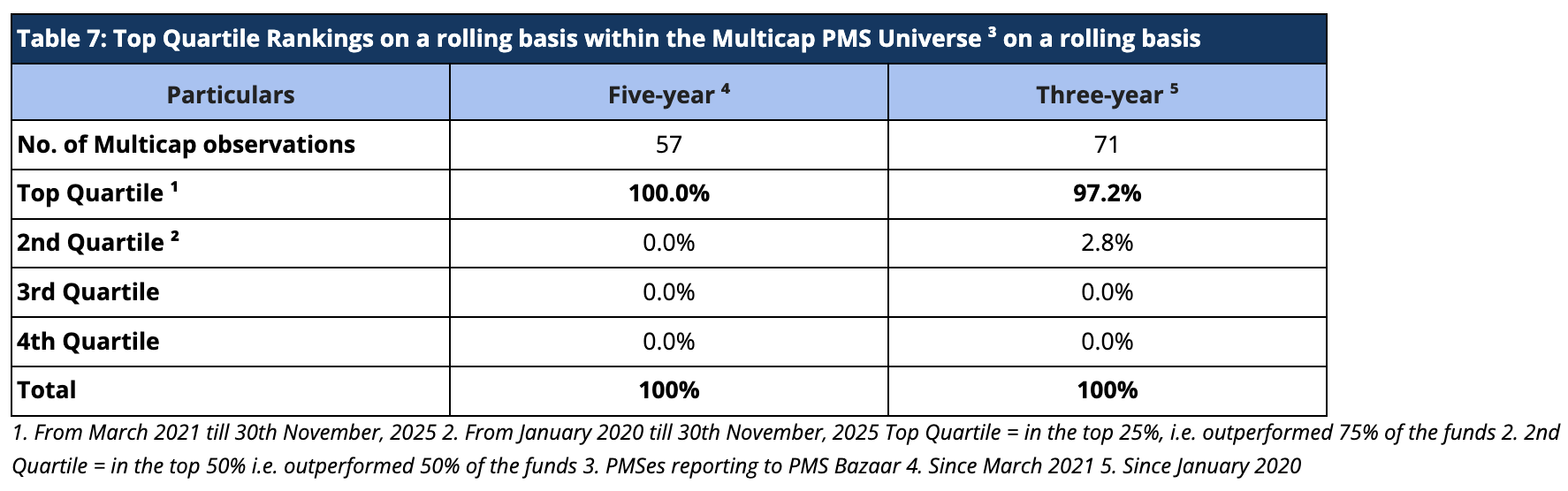
We continue to maintain our top rankings both within the multicap PMS universe as well as the entire PMS universe for key periods of three and five years. The multicap PMS universe rankings are more relevant to us since we follow the multicap strategy. For rolling three-year periods applicable since January 2020, we have been ranked among the multicap universe in the Top Decile 62% of the time (44 out of 71 observations) and in the Top Quartile 97.2% of the time (69 out of 71 observations). For rolling five-year periods applicable to our entire operating history, we have been ranked among the multicap universe in the Top Quartile 100% (57 out of 57 observations) and Top Decile 98.2% of the time (56 out of 57 observations) (Tables 6 and 7).
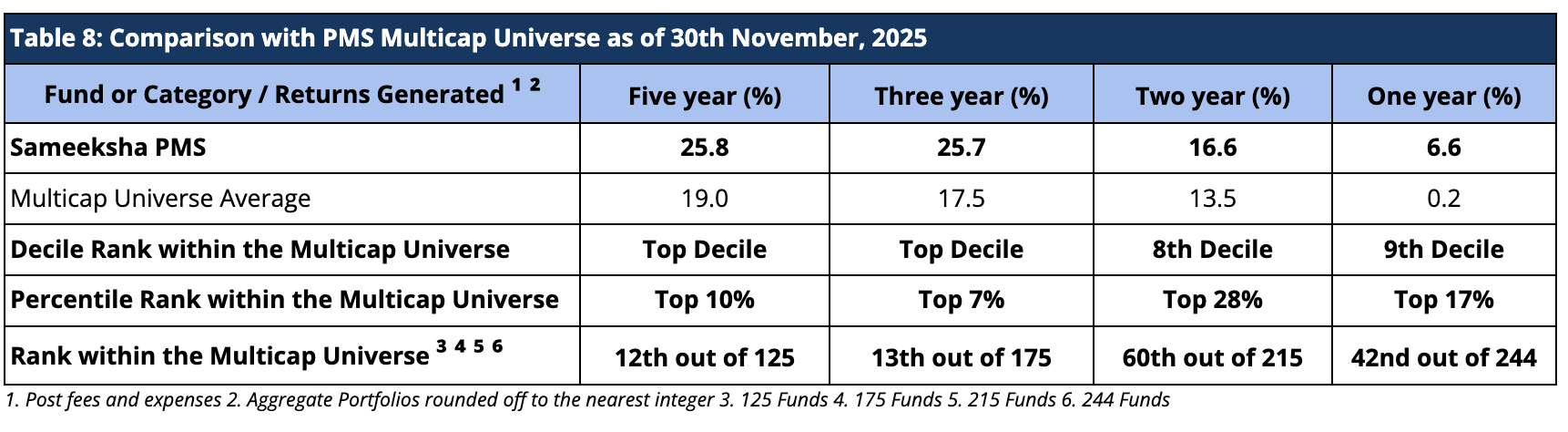
We present our rankings among the multicap PMSes across all AUM sizes. Within this universe, we are 12th out of 125 PMSes for the five year period and 13th out of 175 PMSes for three-year period, highlighting our superior performance over the long term periods (Table 8). Among the multicap universe across all AUM sizes, we are consistently ranked in the Top Decile for the five-year period for 56 out of 57 observations, reflecting well on the consistency of our performance.
Performance Comparison with Select Mutual Funds Favored by Investors
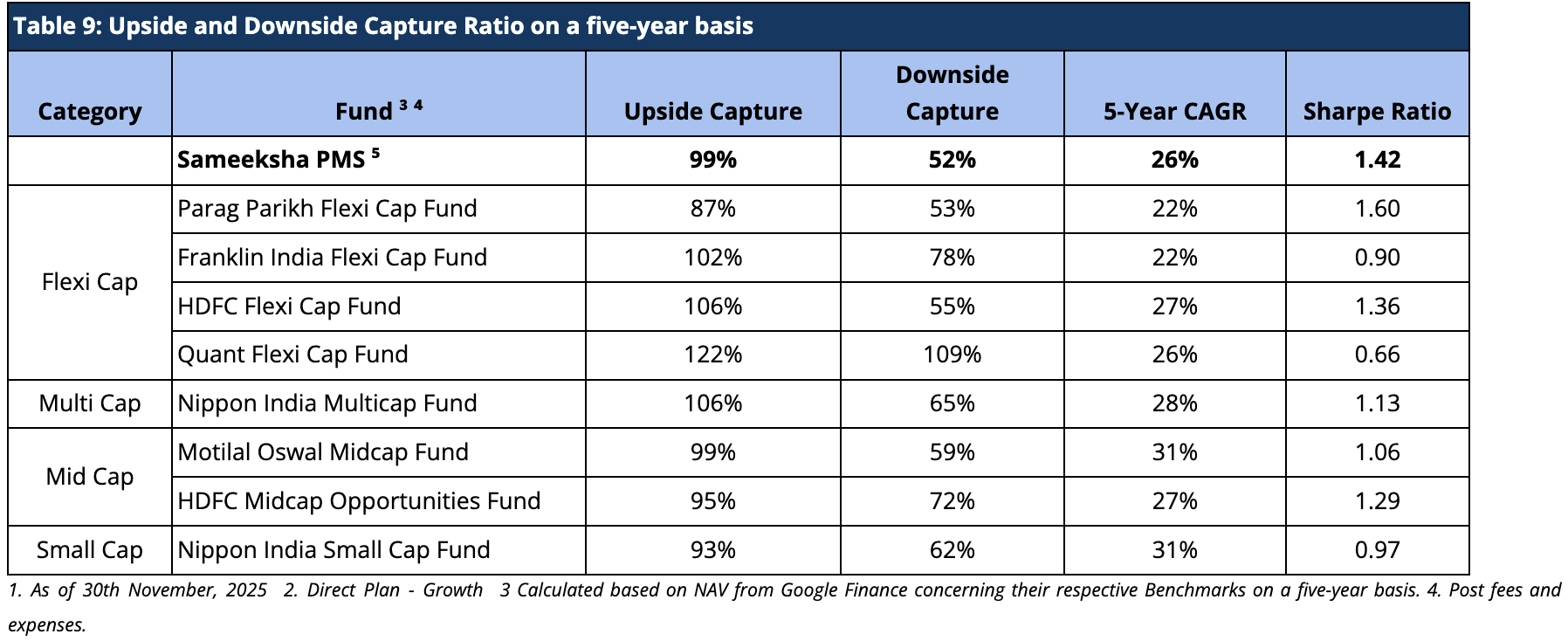
We compare our returns with a group of mutual funds favored by investors across various categories. This ensures that our performance assessment is both relevant and insightful, focusing on funds that align with investor preferences. We have achieved one of the lowest downside capture ratios compared to the mutual funds we analyze, reflecting our strong emphasis on risk management and minimizing losses during market downturns. Over a five-year period, we have delivered superior returns compared to these mutual funds, both in terms of CAGR as well as risk-adjusted returns, showcasing our ability to generate consistent and sustainable performance (Table 9).
Returns of Individual Portfolios
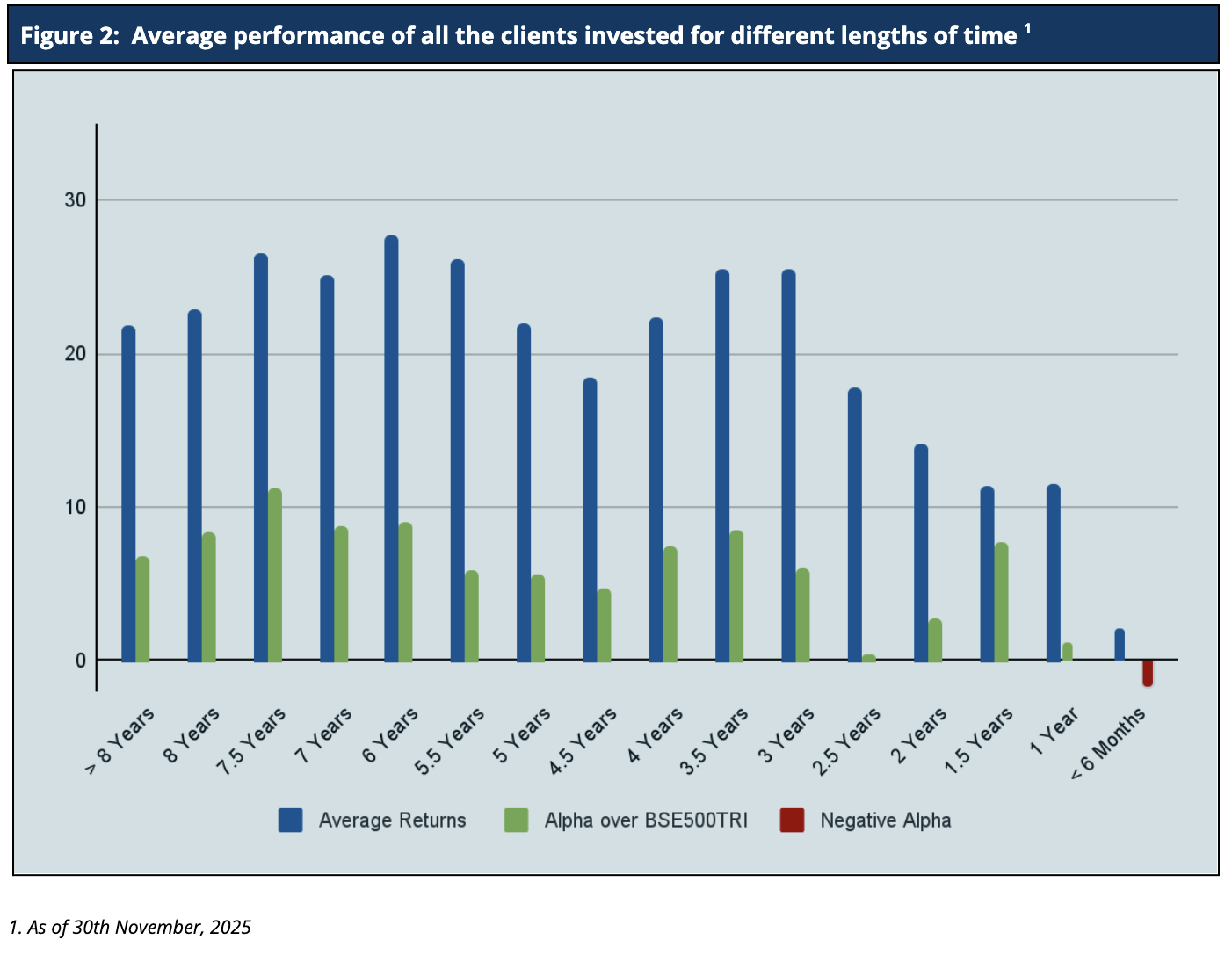
Because we don’t follow a model portfolio strategy, the performance of individual clients is far more important than overall portfolio aggregate returns (Figure 2). For investors who have been with us for five years or more, Sameeksha PMS has returned a very substantial alpha with an average annualized alpha of approx. 6.1% for the five years ending 30th November, 2025. Similarly, for investors who have been with us for three years or more, Sameeksha PMS has returned substantial alpha with an average annualized alpha of approx. 9.5% for the three years ending 30th November, 2025. The Figure below shows the average annualized returns and alpha over different periods of time of all the clients as on 30th November, 2025.
Performance Of PMS Over The Covid Timeline (Pre, During, And Post)
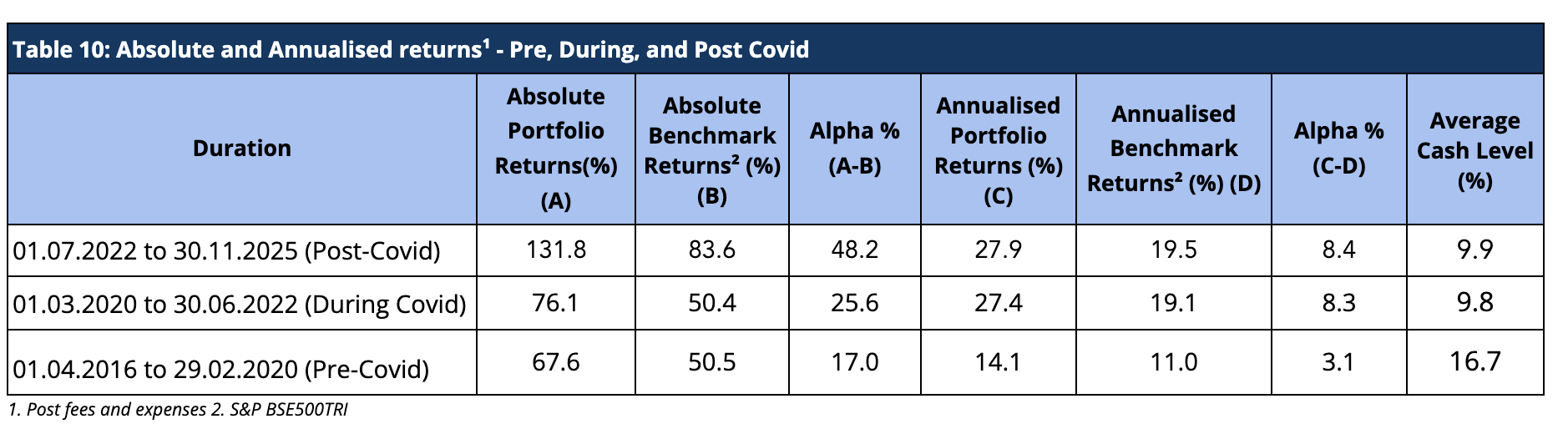
The COVID-19 pandemic induced significant volatility in the equity markets. Hence, it is useful to look at the performance across three time slices: Pre-COVID, During Covid, and Post-Covid. Sameeksha PMS has outperformed the benchmark across all three time periods with meaningful alpha (Table 10). This consistency of performance may be an important factor in comparing us with the other funds.
Aggregate Portfolio Performance on a financial year and calendar year basis
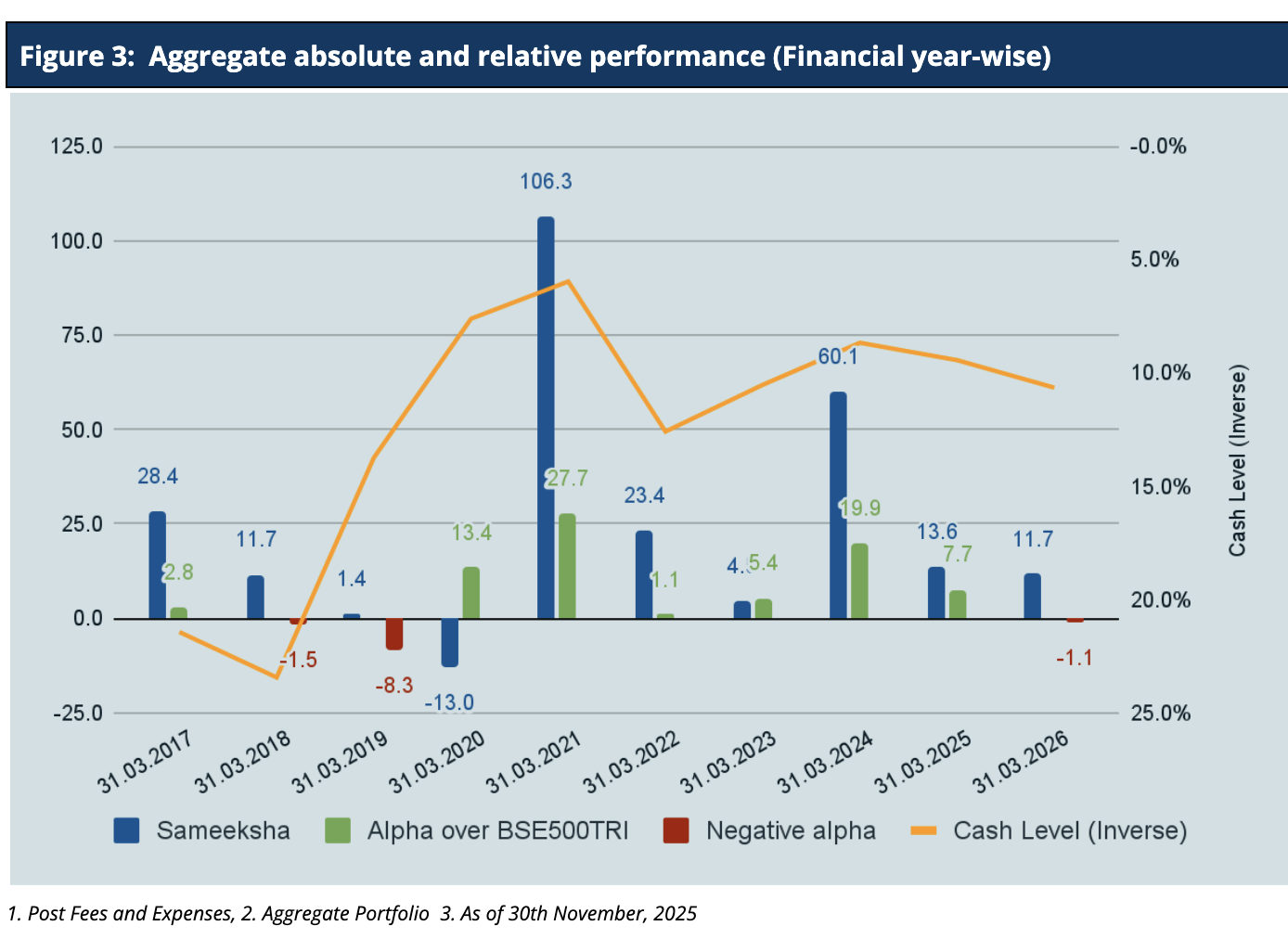
For November, Sameeksha PMS has slightly underperformed the benchmark BSE 500 TRI by 0.7%. For Financial Year 2025-26, we have underperformed BSE500 TRI by 1.1%. Looking at our performance over the financial years (Figure 3), we have outperformed our benchmark in seven out of ten financial years. Key however, is that the sum of outperformance of 78.1% in those seven years far exceeds the sum of underperformance of 10.9% in the remaining three years.
For the Calendar Year 2025, our performance was roughly 0.8% lower than the BSE 500 TRI benchmark, indicating slight underperformance. Looking at our performance over calendar years (Figure 4), we have outperformed the benchmark in six out of ten calendar years, and the sum of outperformance of 88.2% in six years far exceeds the sum of underperformance of 17.3% in the remaining four years.
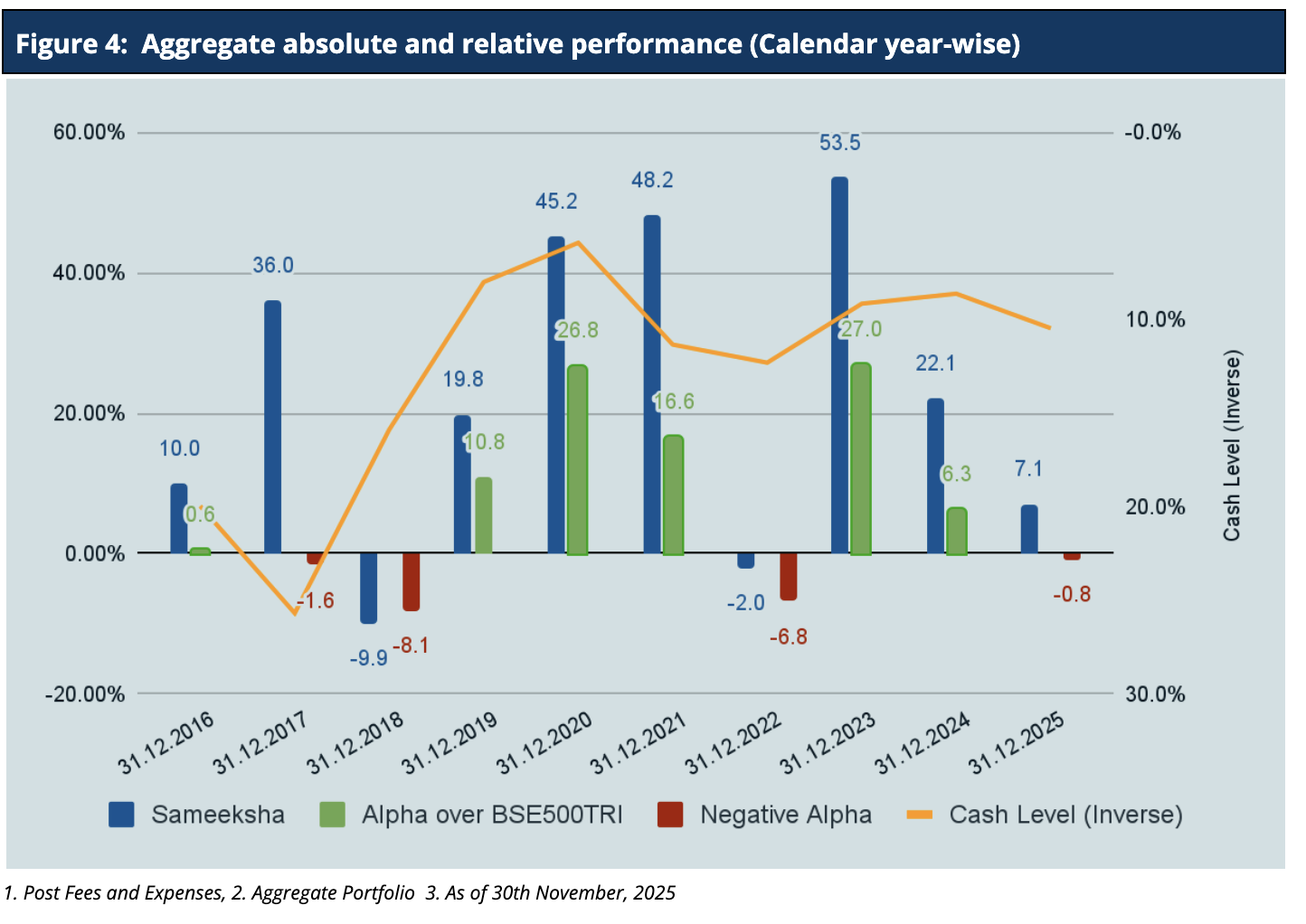
It is important to note that we delivered this alpha despite maintaining an average cash level of 12.6% across the ten financial years.
Cumulative Performance versus the benchmark
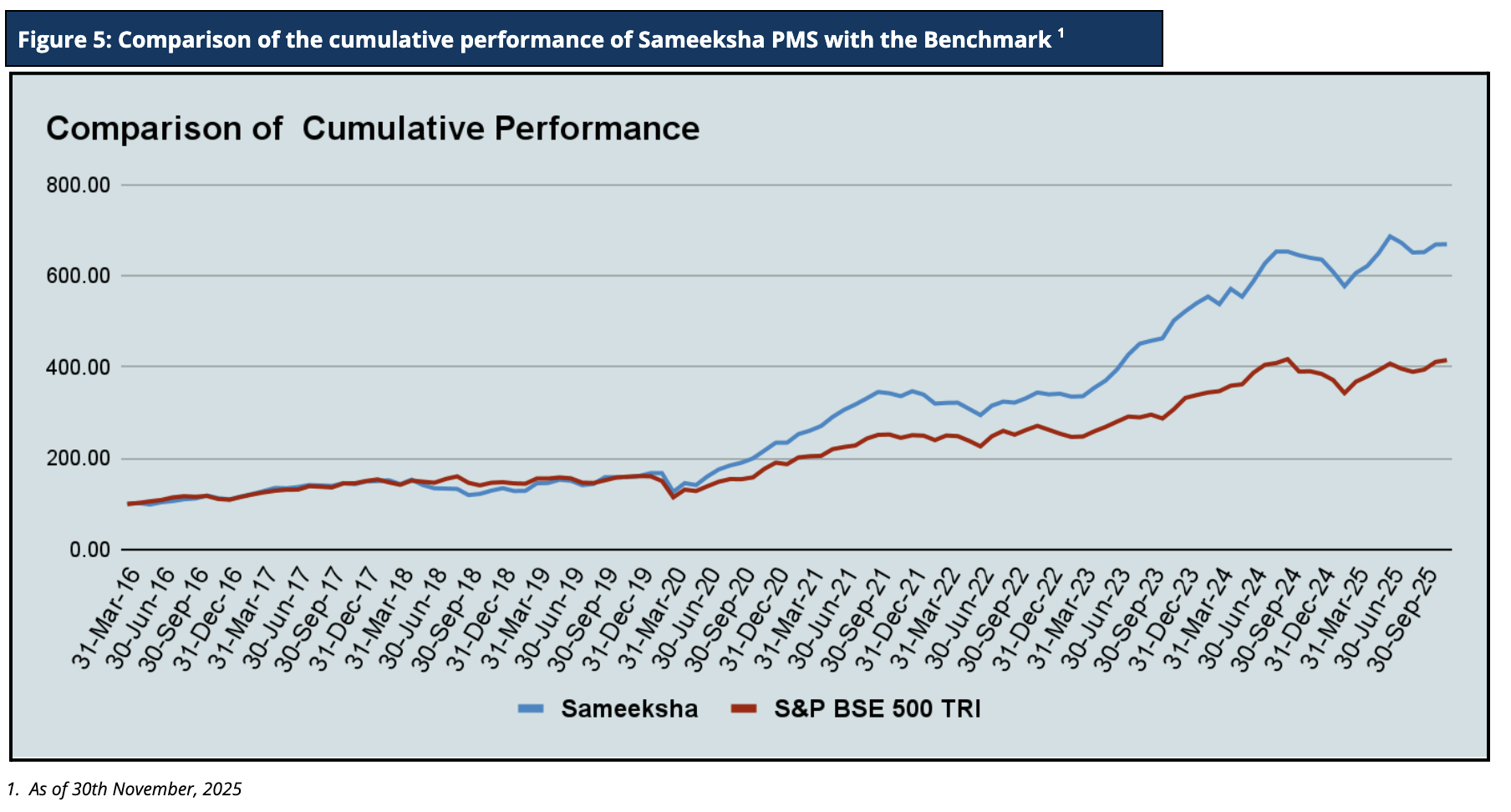
Sameeksha PMS’s outperformance over its benchmark has continued to widen positively over the years. An investment of Rs. 100 with us since inception (April 2016) would have grown to Rs. 670, far outpacing what one would have earned by investing in a fund that achieved benchmark returns (Figure 5).
Analyzing the sector performance during the month
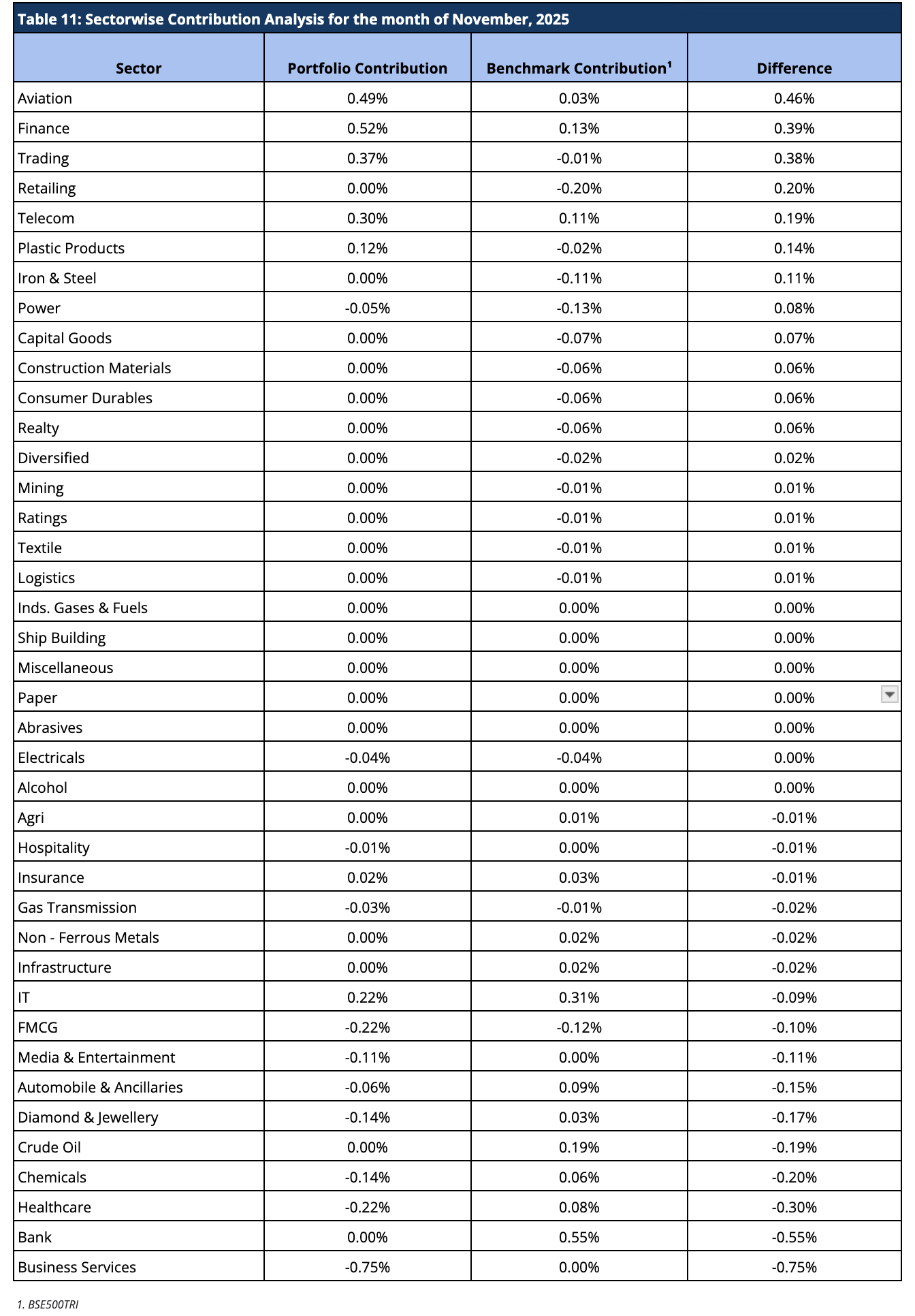
The PMS portfolio underperformed the benchmark in November 2025. The portfolio performed well in sectors like Aviation, Finance and Trading with additional support from Telecom and Plastic Products relative to the benchmark. However, sectors such as Business Services, Bank, Healthcare, Chemicals and Crude Oil underperformed significantly relatively to the benchmark. Overall, while selective sector exposures added value, broad-based weakness across several key segments led to portfolio underperformance for the month.
Below is the contribution analysis for the month of November 2025 (Table 11).
AIF Performance and other details
Aggregate Fund Returns over various time periods
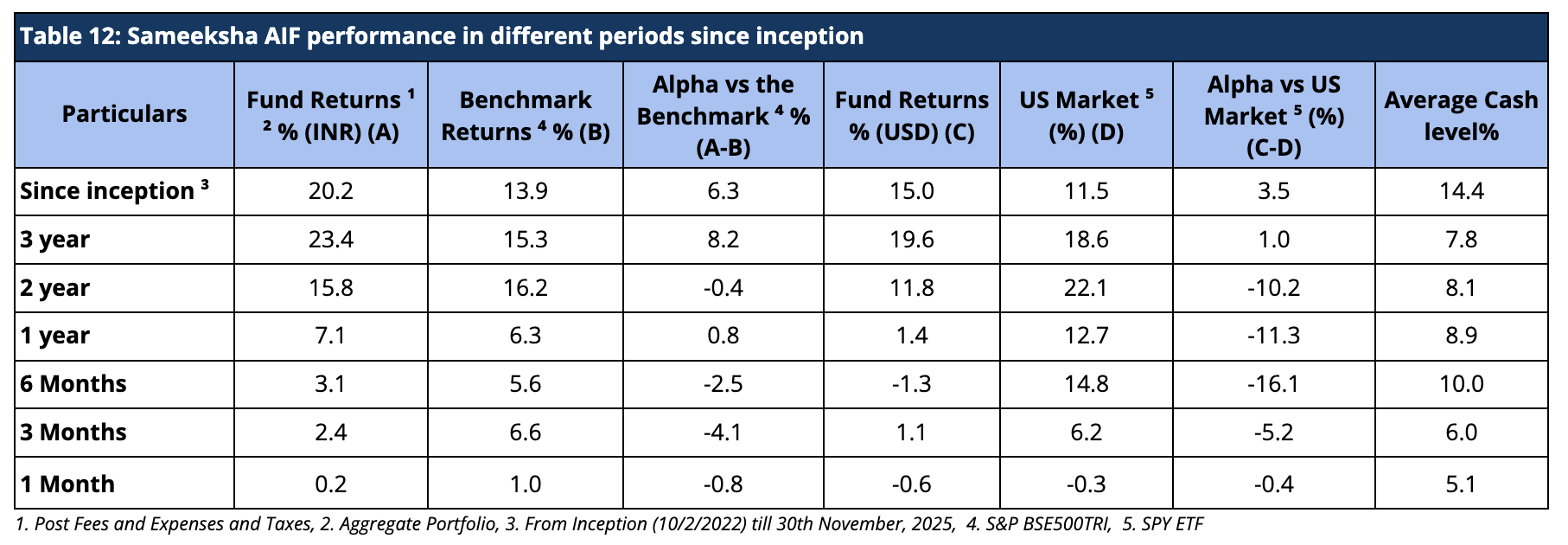
Since inception, we have maintained relatively higher levels of cash (14.4% on average over the entire period from inception) from time to time throughout the management of the fund. Notwithstanding the same, from inception, over three years and two years, we have generated returns of 20.2%, 23.4% and 15.8% in INR terms and 15%, 19.6% and 11.8% in USD terms, beating the benchmark BSE500 TRI returns and ETF tracking S&P 500 index, respectively, after fees and taxes (Table 12).
Aggregate Fund Performance on a Financial Year and Calendar Year basis
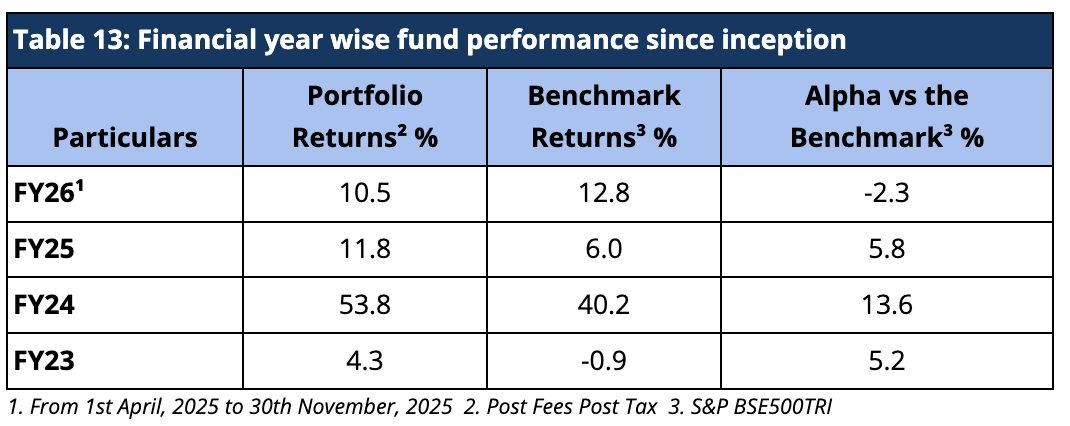
For FY26, Sameeksha AIF has underperformed the benchmark BSE 500 TRI by generating 10.5% returns against the benchmark BSE500TRI returns of 12.8%. Looking at our performance over the financial years (Table 13), we have outperformed our benchmark in FY 2023, FY 2024, and FY 2025.
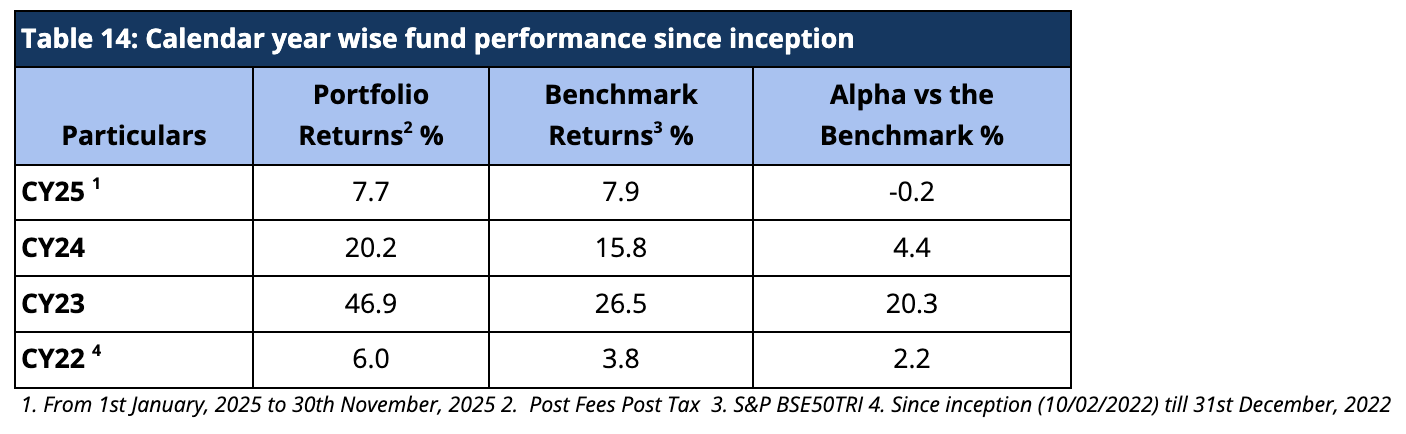
For the Calendar year 2025, we have underperformed the benchmark BSE 500 TRI by -0.2%. Despite being a new fund, we were still able to produce alpha for calendar years 2022, 2023, and 2024 and outperformed the benchmark BSE500 TRI by 2.2%, 20.3% and 4.4% respectively (Table 14).
Risk Adjusted Ratios
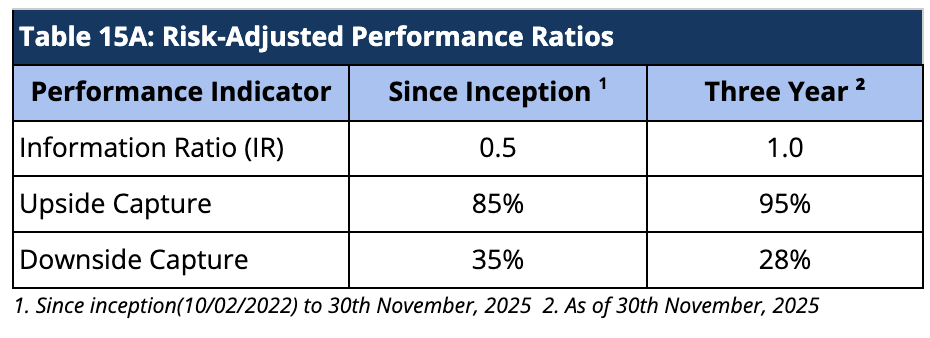
When compared on a risk-adjusted basis, our AIF has shown an even stronger performance. The Information Ratio (IR) measures the excess return of a portfolio over a benchmark per unit of active risk. A higher Information Ratio (IR) suggests better risk-adjusted performance.
Moreover, Upside Capture measures how well a fund performs as compared to a benchmark when the benchmark has positive returns. A higher upside capture ratio (> 100%) indicates that the fund captures more of the benchmark’s positive movements. Whereas, Downside Capture measures how well a fund performs compared to a benchmark when the benchmark has negative returns. A lower downside capture ratio (< 100%) indicates that the fund preserves capital better during market downturns (Table 15A).
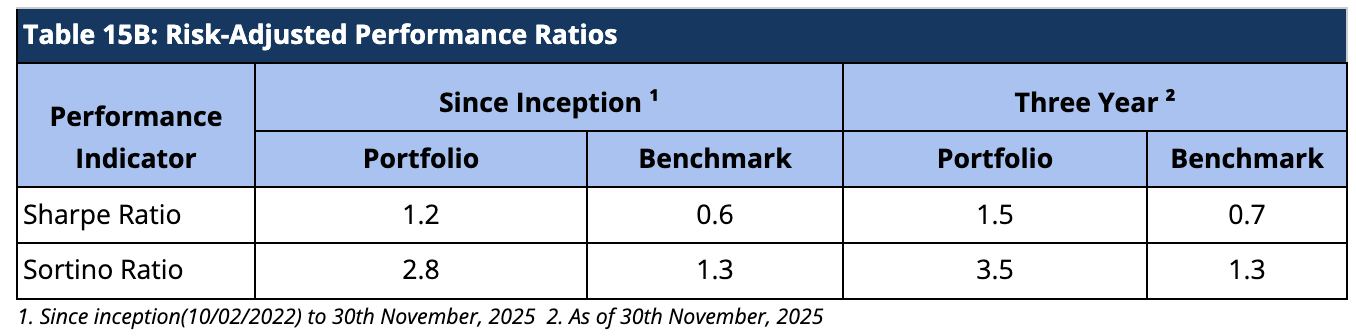
Furthermore, other risk-adjusted returns – Sharpe ratio is also significantly higher. The Sortino ratio measures the risk-adjusted return of an investment, focusing only on the downside risk. A higher Sortino ratio indicates better risk-adjusted returns, particularly concerning downside risk (Table 15B).
Performance within the AIF Universe
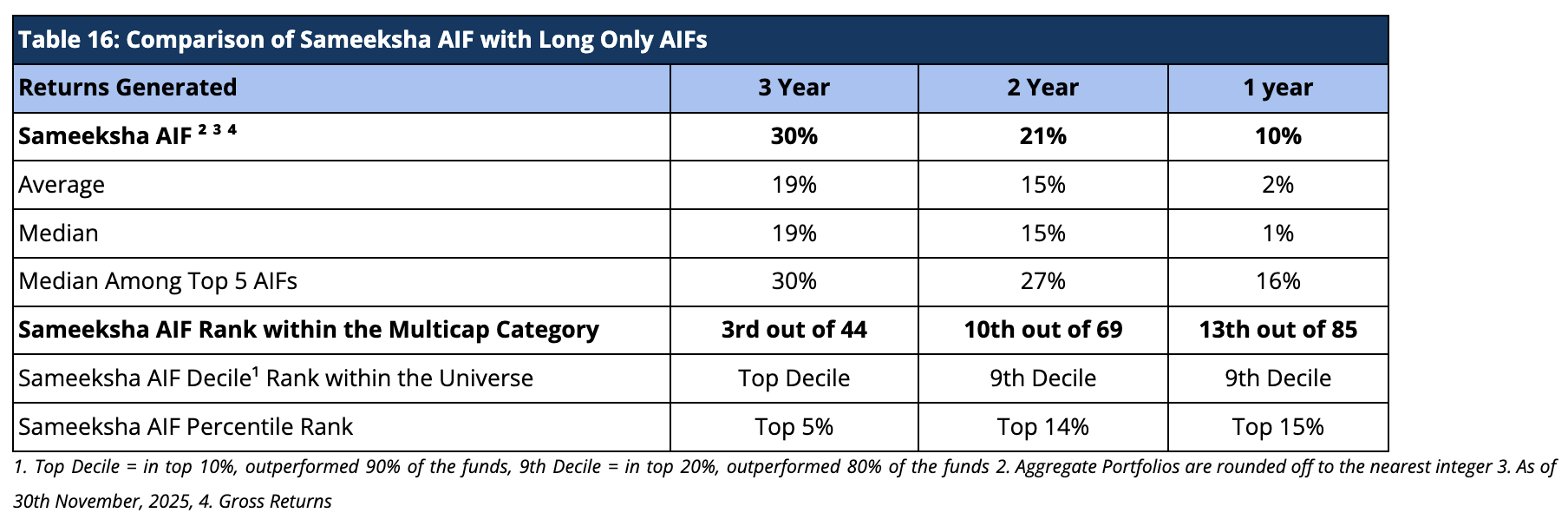
We present our rankings among Long Only Category III AIFs. For the period ending 30th November, 2025, we are ranked 3rd out of 44 AIFs for the three-year period, 10th out of 69 AIFs for the two-year period, and 13th out of 85 AIFs for the one-year period (Table 16). Sameeksha has been Top Decile consistently in the last three years. Because there is a lot of divergence in the way funds report their returns (post-exp & tax; post-exp, pre-tax; gross returns, and post-exp & tax pre-perf. fees &), we are doing a comparison on gross return basis to cover the entire applicable universe of funds.
Cumulative Performance versus the benchmark
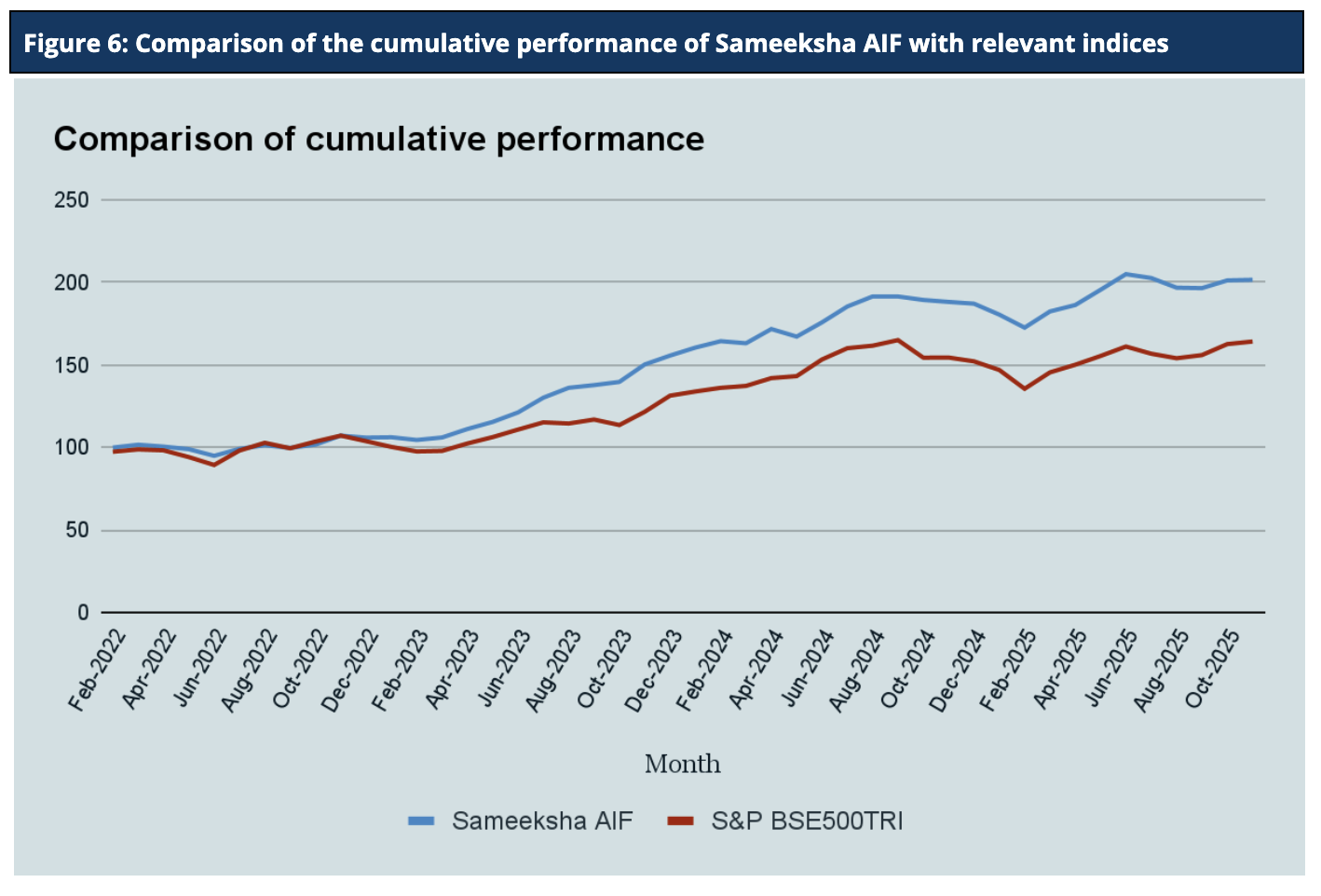
Sameeksha AIF’s outperformance over its benchmark has continued to widen positively since inception. An investment of Rs. 100 with us since inception (Feb 10, 2022) would have grown to Rs. 201.5, far outpacing what one would have earned by investing in a fund that achieved benchmark returns (Figure 6).
Analyzing the sector performance during the month
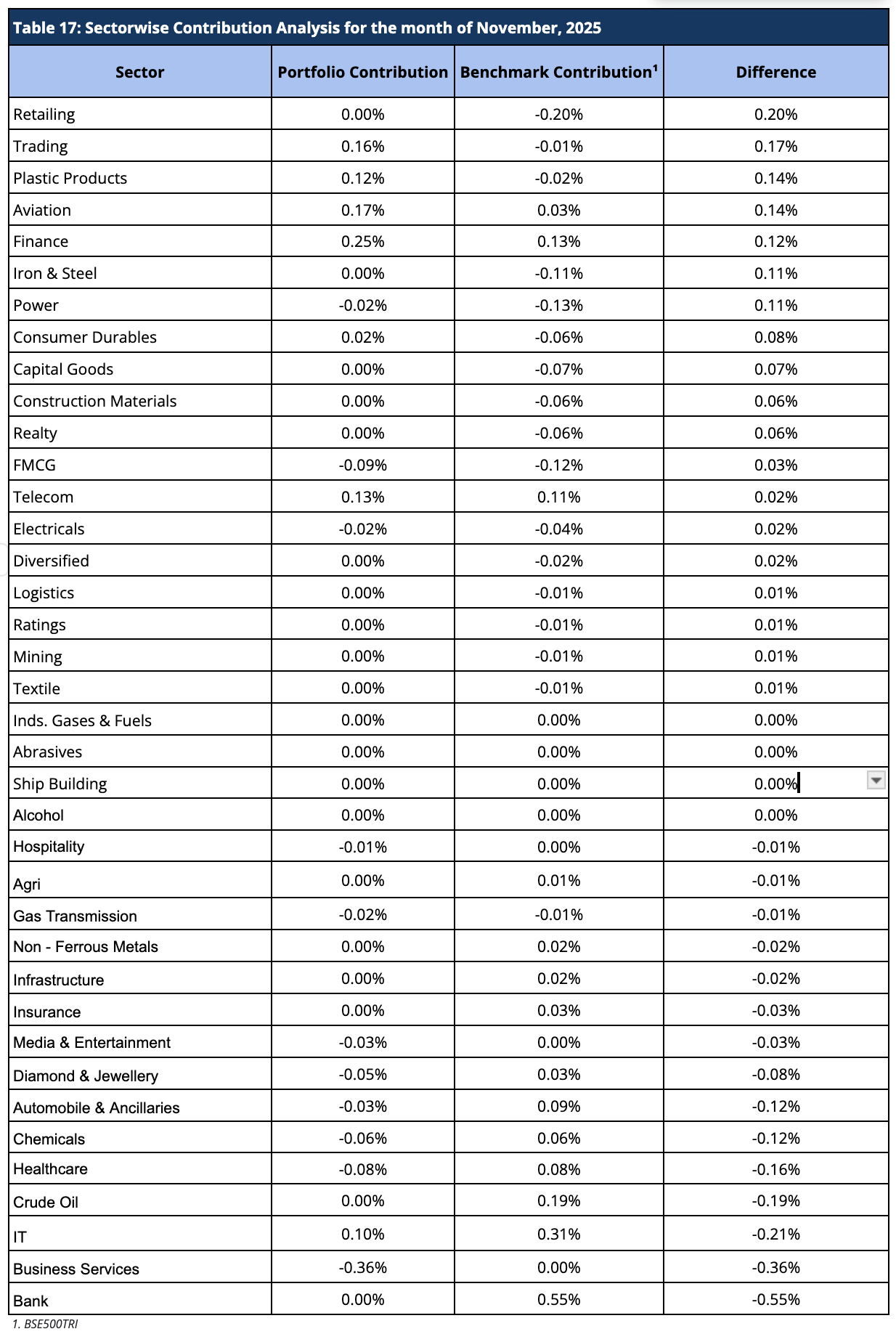
The AIF portfolio underperformed the benchmark in November 2025. The portfolio performed well in sectors like Trading, Plastic Products, Aviation and Finance, Power and Consumer Durables, with additional support from sectors such as Retailing, Iron & Steel, Capital Goods, Construction Materials and Realty relative to the benchmark. However, sectors such as Bank, Business Service, IT, Healthcare, Chemicals and Automobile & Ancillaries underperformed significantly relative to the benchmark. Overall, while selective sector exposures added value, broad-based weakness across several key segments led to portfolio underperformance for the month.
Below is the contribution analysis for the month of November 2025 (Table 17).
Disclaimer – The information contained in this update is provided by our fund accounting platform and is not audited. This document is for informational purposes only and is not intended for solicitation to residents of the United States or any other jurisdiction that would subject Sameeksha Capital or its affiliates to any registration requirement within such jurisdiction or country. It does not constitute an offer to buy or sell securities or financial instruments. Recipients are advised to conduct their own research and seek professional advice before making any investment decisions.